
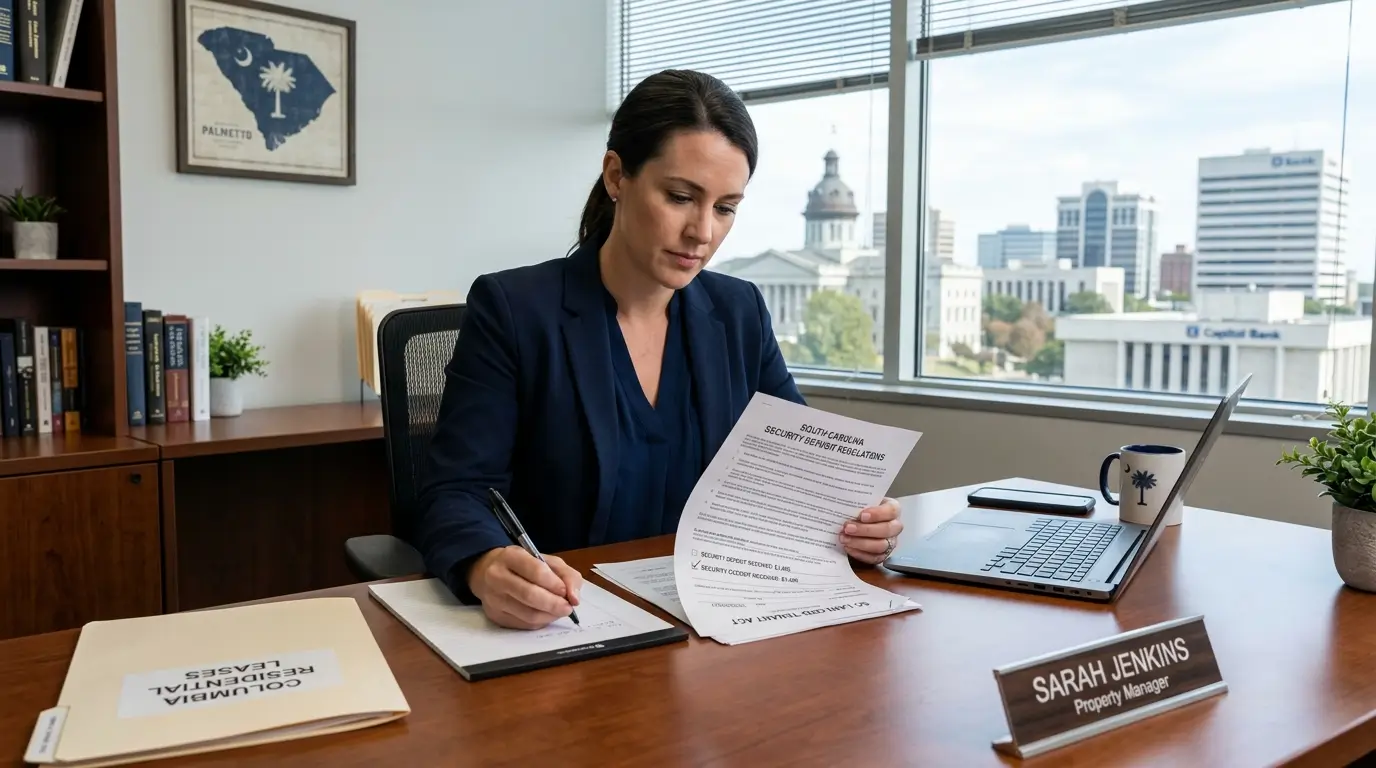
A security deposit is one of the few financial safeguards a landlord holds once the keys change hands. In South Carolina, the rules for collecting, holding, and returning that money take up only a few paragraphs of state law, but they are enforced strictly. One missed deadline or a vague list of deductions can turn a $1,500 deposit into a judgment several times that size. For owners renting homes in Columbia, Lexington, Irmo, and across the Midlands, knowing these rules protects both your income and your standing with future tenants.
Key Takeaways
South Carolina sets no maximum on security deposits, so the amount is a pricing decision rather than a legal limit.
Landlords have 30 days to return the deposit or send an itemized list of deductions, counted from the later of move-out with possession returned or the tenant's demand.
Deductions are limited to unpaid rent and damage caused by the tenant beyond normal wear and tear.
Wrongfully withholding a deposit can cost three times the amount withheld plus the tenant's attorney's fees.
Detailed move-in and move-out documentation is the strongest defense in any deposit dispute.
How Much Can You Charge for a Security Deposit in South Carolina?
South Carolina does not cap security deposits. Unlike many states that limit deposits to one or two months of rent, the amount here is left to the landlord. Most single-family owners in the Columbia area collect the equivalent of one month's rent, then adjust based on the home's condition, whether pets are allowed, and the applicant's rental and credit history.
The smartest way to set a deposit is to pair it with a consistent tenant screening process and apply the same written standards to every applicant. Consistency matters for fair housing compliance, and it matters under state law too. If you rent more than four adjoining units on one property and calculate deposits differently for different tenants, the law requires you to post or hand each prospective tenant a written statement explaining how deposits are calculated. Owners of small apartment buildings in areas like Five Points or West Columbia should keep this rule in mind.
The 30-Day Rule for Returning Deposits
The core requirement is found in Section 27-40-410 of the South Carolina Residential Landlord and Tenant Act. When a tenancy ends, you must return the deposit, minus any lawful deductions, along with a written, itemized notice of what you kept and why. That notice and any refund are due within 30 days after the tenancy ends and possession is returned, or after the tenant makes a demand, whichever comes later.
The tenant has a responsibility here as well. State law requires the tenant to give you a forwarding address in writing. If a tenant leaves without one, and you have no other way of knowing where they went, you are protected from damages as long as you mail the notice and any refund to their last known address. A simple habit helps: ask for the forwarding address in your move-out instructions and confirm it during the final walkthrough.
What You Can and Cannot Deduct
South Carolina limits deductions to two categories: unpaid rent and damages resulting from the tenant failing to meet their legal duties, such as keeping the home reasonably clean and not damaging the property. Everything else stays with the tenant.
Normal Wear and Tear vs. Damage
Normal wear and tear is the gradual decline that happens when people simply live in a home. Faded paint, light scuffs, small nail holes from hanging pictures, and carpet worn thin in hallways all fall into this category. You cannot charge a tenant for them.
Damage goes beyond everyday use. Holes in drywall, pet urine stains, broken blinds, burns on countertops, and missing fixtures are typical examples. Cleaning costs can also qualify when a home is left far dirtier than it was at move-in.
Midlands Conditions to Watch
Columbia's long, humid summers create their own gray areas. Mildew in a bathroom may stem from a tenant who never ran the exhaust fan, or from a ventilation problem the owner is responsible for fixing. A failed HVAC system after months without a filter change may point to tenant neglect if the lease assigned that task to the resident. Clear lease language and documented condition reports are what turn these judgment calls into defensible deductions.
The Cost of Getting It Wrong
The penalty for mishandling a deposit is steep. If a landlord fails to return the deposit or provide the required itemized notice, the tenant can recover three times the amount wrongfully withheld, plus reasonable attorney's fees. Improperly keeping $1,200 could cost an owner $3,600 before legal fees are added.
The obligation also follows the property. Whoever holds the landlord's interest when the tenancy ends is bound by the deposit rules. If you purchase an occupied rental in Cayce or Blythewood, make sure the existing deposits transfer with the sale, because you will be the one responsible for returning them.
How Documentation Protects Your Deposit Decisions
Every deduction you take should be supported by evidence that would make sense to a magistrate who has never seen the property. The strongest deposit files include:
A signed move-in condition report with date-stamped photos of every room
A move-out inspection completed in the same format for easy comparison
Invoices or receipts for each repair or cleaning charge
Copies of all written notices, including the itemized statement and proof of mailing
This is why we perform documented inspections at move-in, move-out, and annually, a commitment backed by our property management guarantees. Pairing that record with prompt, professional maintenance and repair coordination means the home is turned quickly and every charge is backed by a paper trail.
Frequently Asked Questions
Do South Carolina landlords have to pay interest on security deposits?
No. State law does not require landlords to hold deposits in interest-bearing accounts or pay interest to tenants.
Can I apply the deposit to rent owed if a tenant breaks the lease early?
Yes, accrued rent is an allowable deduction, as long as it is itemized in your written notice within the 30-day window. The law also preserves your right to pursue other damages separately.
Do pet deposits follow the same rules?
A refundable pet deposit held as security is generally treated like any other deposit. If a pet fee is non-refundable, label it clearly as a fee in the lease so there is no confusion at move-out.
Keeping Your Columbia Rental Protected From Move-In to Move-Out
South Carolina's deposit rules reward owners who are organized and penalize those who are not. Set a reasonable deposit, document the home's condition thoroughly, deduct only what the law allows, and send your itemized notice well before the 30-day deadline. Handling these details correctly every time is one of the easiest ways to avoid costly disputes.
If you would rather leave deposit accounting, inspections, and tenant communication to a local team, we are ready to help. Explore our full-service Columbia property management and see how we protect owners across the Midlands.
