
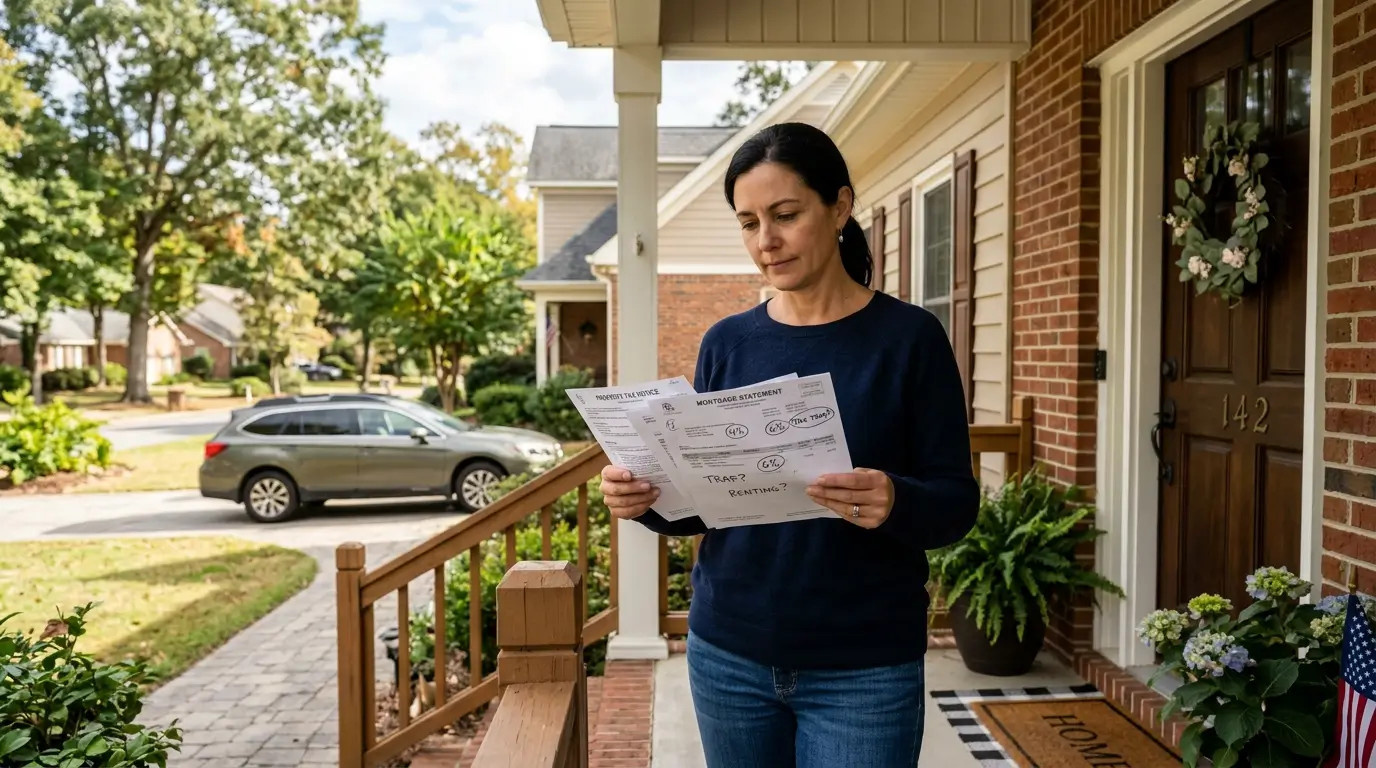
Many Midlands rental owners never planned to become landlords. A job transfer, a growing family, or a soft resale market leads them to keep their first home and rent it out instead of selling. It is often a smart move, but there is one cost that catches nearly every new landlord in South Carolina by surprise: the property tax bill. Once a home stops being your legal residence, the way it is taxed changes dramatically, and the increase is far larger than most owners expect.
Key Takeaways
South Carolina taxes an owner-occupied legal residence at a 4% assessment ratio, while rental homes are assessed at 6%.
Rental homes also lose the exemption from school operating taxes, which is often the largest part of a local tax bill.
Together, these changes can make a rental's property taxes two to three times higher than the same home's taxes as a primary residence.
Owners must notify the county assessor within six months of a change in use, or risk back taxes plus penalties and interest.
Building the higher tax into your rent and your rent-versus-sell analysis protects your cash flow from day one.
How South Carolina Calculates Property Taxes
Every South Carolina property tax bill follows the same basic formula. The county assessor determines the home's fair market value, multiplies it by an assessment ratio to get the assessed value, and then applies the local millage rate. In Richland and Lexington counties, that millage is a combination of county, municipal, school district, and special district levies.
The assessment ratio is where owner-occupied homes and rentals part ways. According to the South Carolina Department of Revenue's homeowner's guide to legal residence, a qualifying primary residence is assessed at 4% of its value. Rental properties, second homes, and most other real estate are assessed at 6%.
The Two Changes That Raise a Rental's Tax Bill
A Higher Assessment Ratio
Moving from 4% to 6% means your assessed value rises by 50% overnight, even though the home itself has not changed. A house valued at $250,000 carries an assessed value of $10,000 as a legal residence. As a rental, that same house is assessed at $15,000.
Loss of the School Operating Exemption
The second change often has an even bigger impact. Since the Property Tax Reform Act of 2006, commonly called Act 388, owner-occupied legal residences have been exempt from property taxes levied for school operations. Rental homes do not receive that exemption. Because school operating millage is frequently the largest single piece of a local tax bill, losing it can more than double the effective rate on its own.
When both changes hit at once, the difference is striking. A Lincoln Institute of Land Policy analysis of South Carolina's property tax system illustrated a $150,000 home that would owe roughly $1,200 a year as a primary residence and more than $4,100 as a rental. Actual figures vary by school district and municipality, so an owner in Irmo, Chapin, or downtown Columbia will see different numbers, but the pattern holds across the Midlands.
When Does a Home Lose the 4% Ratio?
South Carolina allows some flexibility for occasional renting. A legal residence can be rented for up to 72 days in a calendar year and keep the 4% ratio. Rent it for more than 72 days, and the home no longer qualifies for that year.
There are a few specific exceptions in state law, including certain protections for active-duty service members and owners who move into nursing care. If one of these situations applies to you, confirm your eligibility directly with the county assessor before assuming the higher rate will apply.
Your Duty to Notify the Assessor
The 4% classification does not switch off automatically when you move out. State law requires owners to notify the county assessor within six months of a change in use. Owners who keep the lower rate after losing eligibility can face back taxes along with penalties and interest, and several South Carolina counties now actively audit legal residence claims. Telling the Richland County or Lexington County assessor promptly is far less expensive than being caught later.
Building the Tax Increase Into Your Rental Plan
The higher tax bill does not make renting a bad decision. It simply needs to be part of the math from the start. Before you list your home, take these steps:
Estimate the new tax bill using the 6% ratio and your school district's full millage, or call the county auditor for a projection.
Update your escrow expectations, since your lender will raise your monthly payment once the new bill arrives.
Price your rent to cover the higher tax along with insurance, maintenance reserves, and vacancy.
Track property taxes as a deductible rental expense so they reduce your taxable rental income.
Running the numbers through our rent vs. sell calculator is a quick way to see whether keeping the home still makes sense after the tax change. Our ROI calculator can then help you test different rent levels against your new expenses. Once the home is leased, clear owner accounting and reporting makes it easy to see exactly how property taxes affect your monthly cash flow and to hand your CPA clean records at tax time.
Frequently Asked Questions
Can I rent my home for part of the year and keep the 4% rate?
Yes, as long as the home remains your legal residence and is rented for no more than 72 days during the calendar year. Many counties still ask you to report the rental, so check with your assessor.
If I move back into the home later, can I get the 4% ratio again?
Generally, yes. Once the home is your legal residence again, you can reapply with the county assessor. Applications are typically due by the first penalty date in January, so plan ahead.
Does the higher rate apply to condos and townhomes too?
Yes. The assessment ratio depends on how the property is used, not the type of home, so any residence rented beyond the 72-day limit is assessed at 6%.
Plan for the Tax Change Before You Hand Over the Keys
The jump from 4% to 6%, combined with losing the school operating exemption, is one of the largest cost changes a new Midlands landlord will face. Owners who notify the assessor on time, budget for the new bill, and price their rent accordingly can still build a profitable rental. Those who ignore it often find their cash flow wiped out by the first tax notice.
If you are deciding whether to rent or sell, we can help you see the full picture. Request a free rental analysis for your Columbia-area home and find out what your property could earn in today's market.
